

Rivell provides managed IT services in Sewell, New Jersey, that handle continuous network monitoring, endpoint protection, and cloud infrastructure oversight. This guide covers the specific capabilities, service models, and operational benefits of professional network monitoring for local businesses.
Network Monitoring
Network monitoring is the continuous process of tracking the performance, availability, and security of an organization's IT infrastructure. For businesses in Sewell and the broader South Jersey region, this practice is essential for maintaining operational stability. It involves collecting data from routers, switches, servers, and endpoints to identify anomalies before they cause downtime.
Why Local Businesses Need Monitoring
Small and mid-sized businesses often lack the dedicated staff required to watch network traffic 24/7. Without active monitoring, issues like bandwidth saturation, failing hardware, or security breaches can go unnoticed until they disrupt operations. Rivell's approach focuses on proactive detection, ensuring that potential problems are flagged and resolved before they impact productivity.
The Role of Proactive Oversight
Proactive monitoring shifts the IT paradigm from reactive troubleshooting to preventive maintenance. By establishing baseline performance metrics, IT providers can detect deviations that signal emerging threats. This method is critical for businesses that rely on cloud applications, VoIP systems, and remote access, as any network instability directly affects service delivery.
Managed IT Services
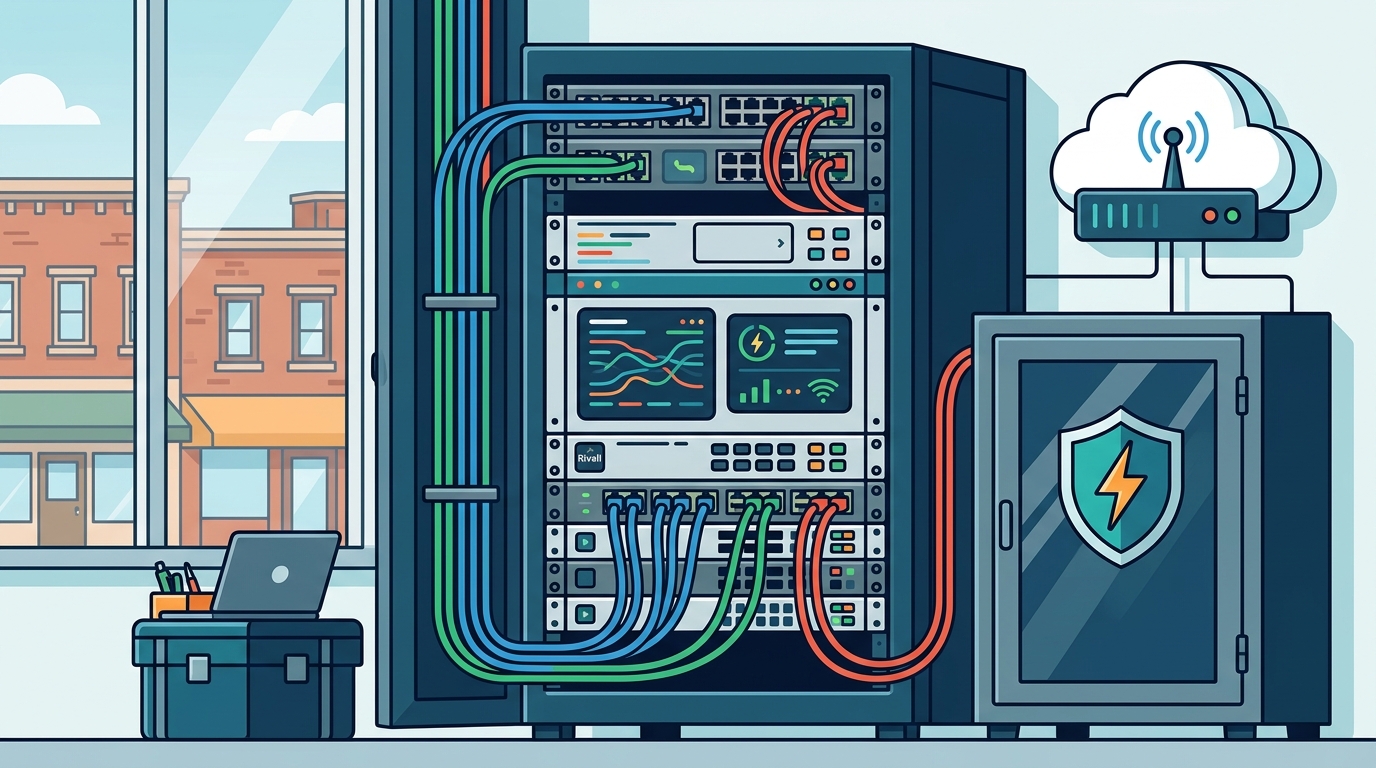
Managed IT services are a comprehensive outsourcing model where a provider assumes responsibility for managing and supporting an organization's IT infrastructure. This model allows businesses to access enterprise-grade expertise without the overhead of hiring a full in-house team. It typically includes help desk support, cybersecurity, and infrastructure management under a single service agreement.
Service Models and Coverage
Businesses can choose between fully managed and co-managed models. In a fully managed environment, the provider handles all IT tasks. In a co-managed model, the internal team retains ownership of specific functions while the provider fills capability gaps. Rivell offers both approaches, tailoring the scope to match the specific needs and maturity of the client's IT environment.
Benefits for South Jersey Organizations
Outsourcing IT to a local provider like Rivell offers several strategic advantages. It provides predictable monthly costs, access to specialized security tools, and faster response times due to local presence. This model helps organizations in Sewell and nearby areas maintain competitive advantage by ensuring their technology stack is optimized for growth and security.
Network Monitoring Services
Network monitoring services are specialized tools and processes used to observe the health of network components in real-time. These services go beyond simple uptime checks to include deep packet inspection, latency analysis, and security event correlation. They provide the visibility needed to troubleshoot complex issues and ensure compliance with industry standards. according to Highly Adaptive Cybersecurity
Core Components of Monitoring
Integration with Cloud and Security
Modern monitoring services integrate seamlessly with cloud platforms and cybersecurity tools. This integration allows for unified dashboards that display both infrastructure health and security posture. For businesses using Microsoft 365 or other SaaS applications, this integration ensures that identity and access issues are detected alongside network performance metrics.
7 Monitoring Capabilities
Professional network monitoring encompasses seven core capabilities that ensure comprehensive coverage. These capabilities work together to provide a robust defense against downtime and security threats. Understanding these functions helps businesses evaluate the depth of service offered by their IT provider.
1. Real-Time Performance Tracking
This capability involves continuous measurement of network speed, latency, and packet loss. It ensures that users experience consistent performance for critical applications. Alerts are triggered when metrics fall outside defined thresholds, allowing for immediate intervention.
2. Endpoint Security Monitoring
Endpoint monitoring tracks the security status of all devices connected to the network. This includes laptops, desktops, and mobile devices. It ensures that antivirus definitions are current and that no unauthorized software is running on company assets.
3. Cloud Infrastructure Oversight
As businesses migrate to the cloud, monitoring extends to virtual servers and storage. This capability tracks resource utilization in cloud environments, ensuring that costs are optimized and performance remains stable. It provides visibility into cloud-native applications and services.
4. Security Event Correlation
This function analyzes logs from various security tools to identify patterns of attack. By correlating events from firewalls, intrusion detection systems, and endpoints, providers can distinguish between false positives and genuine threats. This reduces alert fatigue and improves response accuracy.
5. Backup and Recovery Verification
Monitoring includes verifying that backups are completing successfully and that data is restorable. This capability ensures business continuity by confirming that recovery points are available in the event of a disaster. It provides peace of mind that critical data is protected.
6. User Activity and Access Control
This capability monitors user logins and access permissions. It helps detect unauthorized access attempts and ensures that employees only have access to the resources they need. It supports compliance with data protection regulations and internal security policies.
7. Proactive Alerting and Reporting
Proactive alerting notifies IT staff of issues before they cause downtime. Regular reporting provides a summary of network health, security incidents, and performance trends. These reports help businesses make informed decisions about infrastructure upgrades and security investments.
Comparison of Monitoring Approaches
| Approach | Responsibility | Best For | Cost Structure |
|---|---|---|---|
| In-House Monitoring | Internal IT Staff | Large Enterprises with Dedicated Teams | High Fixed Costs (Salaries, Tools) |
| Co-Managed Monitoring | Shared (Internal + Provider) | Businesses with Partial IT Staff | Variable (Based on Scope) |
| Fully Managed Monitoring | External Provider | SMBs Without IT Staff | Predictable Monthly Fee |
Key Takeaways
- Network monitoring is the continuous tracking of IT infrastructure performance and security.
- Managed IT services provide a cost-effective way to access enterprise-grade monitoring expertise.
- Professional monitoring services include performance tracking, security correlation, and cloud oversight.
- Seven core capabilities define comprehensive monitoring: performance, endpoint security, cloud, correlation, backup, access, and alerting.
- Local providers like Rivell offer faster response times and tailored solutions for South Jersey businesses.
- Proactive monitoring prevents downtime and security breaches by identifying issues before they escalate.
- Choosing the right service model (co-managed vs. fully managed) depends on internal IT capacity.
- Regular reporting and proactive alerting are essential for maintaining operational stability.
Frequently Asked Questions
What is the primary benefit of network monitoring for small businesses?
The primary benefit is the prevention of downtime. By identifying issues early, businesses can avoid the productivity losses and revenue impact associated with system failures.
How does Rivell handle network monitoring in Sewell?
Rivell uses a combination of automated tools and expert analysis to monitor network health. Their team provides proactive alerts and regular reports to keep clients informed about their IT environment.
What is the difference between co-managed and fully managed IT services?
In co-managed services, the internal team retains ownership of some IT functions while the provider assists. In fully managed services, the provider takes complete responsibility for all IT tasks and support.
Why is endpoint security monitoring important?
Endpoints are often the entry point for cyberattacks. Monitoring ensures that all devices are secure, up-to-date, and compliant with security policies, reducing the risk of malware and data breaches.
Can network monitoring help with cloud migration?
Yes, monitoring is critical during and after cloud migration. It ensures that workloads perform as expected in the new environment and helps optimize resource usage to control costs.
How often should businesses review their monitoring reports?
Businesses should review monitoring reports monthly to track trends and quarterly to assess overall IT health and security posture. This regular review helps identify areas for improvement.
What tools are typically used for network monitoring?
Providers use a suite of tools including network performance monitors, security information and event management (SIEM) systems, and cloud management platforms. These tools provide the data needed for effective monitoring.
Is local IT support necessary for network monitoring?
While remote monitoring is possible, local support provides faster on-site response for hardware issues. Local providers like Rivell can offer both remote oversight and physical presence when needed.
Conclusion
Effective network monitoring is a cornerstone of modern business IT strategy. By leveraging managed IT services, organizations in Sewell and South Jersey can ensure their infrastructure is secure, performant, and ready to support growth. Rivell provides the expertise and tools necessary to maintain a resilient IT environment, allowing businesses to focus on their core operations. To discuss your monitoring needs, contact Rivell today. according to Highly Adaptive Cybersecurity